How to Choose Between IOP, PHP, and Inpatient Treatment
Deciding to seek help for addiction or mental health challenges is a powerful first step. For many individuals and families, however, the next question can feel overwhelming:
“What level of treatment is the right one?”
Between Inpatient (Residential) Treatment, Partial Hospitalization Programs (PHP), and Intensive Outpatient Programs (IOP), the options can feel confusing—especially during an already emotional time. Each level of care serves a different purpose, and choosing the right fit can make a meaningful difference in recovery outcomes.
At Windansea Recovery, helping individuals and families understand these options is a core part of the admissions and clinical process. This guide explains the differences between IOP, PHP, and inpatient treatment, what each is designed to address, and how to determine which level of care best supports long-term recovery.
Why Level of Care Matters in Recovery
Addiction and co-occurring mental health conditions exist on a spectrum. Factors such as substance use history, mental health symptoms, physical safety, support systems, and daily responsibilities all influence what kind of treatment is appropriate.
Choosing the right level of care:
Improves safety and stabilization
Increases engagement in treatment
Reduces relapse risk
Supports sustainable, long-term recovery
There is no “one size fits all” approach. The goal is to match treatment intensity with clinical need.
Inpatient (Residential) Treatment: Full-Time Support and Stabilization
Inpatient treatment, also called residential treatment, is the most structured and intensive level of care.
What Inpatient Treatment Involves
24/7 supervised care in a residential setting
Removal from daily triggers and environments
Individual therapy, group therapy, and clinical support
Medical monitoring when needed
Highly structured daily schedules
Who Inpatient Treatment Is Best For
Inpatient treatment is often recommended for individuals who:
Have severe or long-term substance use disorders
Are at high risk of relapse
Have co-occurring mental health conditions requiring stabilization
Need a safe, controlled environment
Have not succeeded in outpatient treatment previously
Inpatient care provides a protected space to focus entirely on recovery, especially during early sobriety.
Partial Hospitalization Program (PHP): Intensive Care With Growing Independence
A Partial Hospitalization Program (PHP) offers intensive treatment similar to inpatient care, but without overnight stays.
What PHP Looks Like
Structured treatment 5–6 days per week
Several hours of therapy each day
Individual, group, and sometimes family therapy
Strong clinical oversight
Evenings spent at home or in sober living
Who PHP Is Ideal For
PHP is often appropriate for individuals who:
Do not require 24-hour supervision
Need more structure than outpatient care
Are stepping down from inpatient treatment
Have a supportive living environment
Need daily therapeutic engagement
PHP allows individuals to practice independence while still receiving significant clinical support.
Intensive Outpatient Program (IOP): Flexibility With Accountability
An Intensive Outpatient Program (IOP) is designed for individuals who need ongoing treatment but must balance recovery with daily responsibilities.
What IOP Involves
Therapy sessions multiple days per week
Group therapy, individual counseling, and relapse prevention
Flexible scheduling (morning, afternoon, or evening)
Ability to work, attend school, or care for family
Continued accountability and support
Who IOP Is Best Suited For
IOP is often recommended for individuals who:
Have stable housing
Are medically and emotionally stable
Are transitioning from PHP or inpatient care
Need structured support while living independently
Are motivated to engage in recovery while maintaining responsibilities
IOP is where many people learn how to apply recovery skills in real-world settings.
Comparing IOP, PHP, and Inpatient Treatment
Understanding how these programs differ can make the decision clearer.
Inpatient Treatment
Highest level of care
24/7 supervision
Best for stabilization and early recovery
PHP
High level of care without overnight stays
Daily structure and therapy
Ideal step-down from inpatient or step-up from outpatient
IOP
Moderate level of care
Flexible scheduling
Focused on long-term sustainability and independence
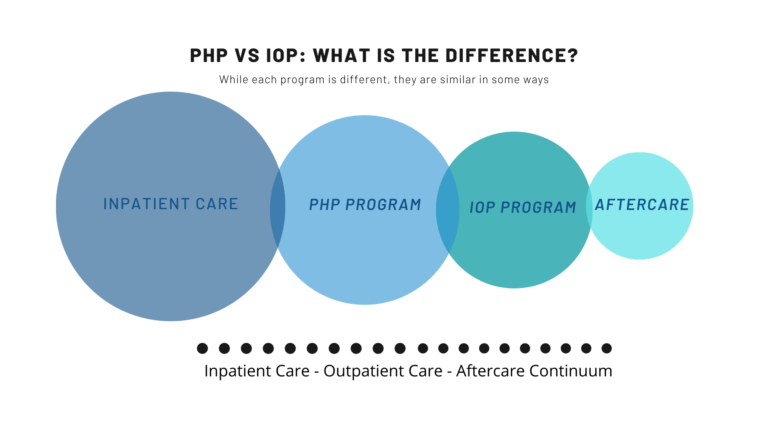
Rather than competing options, these levels of care often work together as part of a recovery continuum.
Key Questions to Ask When Choosing a Program
Choosing the right level of care starts with honest self-assessment and professional guidance.
Consider the following questions:
How severe is the substance use or mental health condition?
Is there a risk of medical or psychiatric crisis?
Has outpatient treatment been effective in the past?
What does the home environment look like?
Are work, school, or family obligations present?
Is there a strong support system in place?
Licensed clinicians use these factors to make recommendations based on safety and effectiveness—not convenience.
Why Stepping Down in Care Improves Long-Term Outcomes
Many people assume that finishing treatment means being “done.” In reality, recovery works best when care is stepped down gradually.
A common path may look like:
Inpatient treatment for stabilization
PHP for structured transition
IOP for real-world application
Aftercare and relapse prevention
This approach:
Reduces relapse risk
Builds confidence over time
Allows skills to develop progressively
Each level of care reinforces the next.
The Role of Aftercare and Relapse Prevention
No matter which level of care someone enters, aftercare planning is essential.
Effective programs integrate:
Relapse prevention education
Continued therapy or support groups
Family involvement
Accountability and follow-up care
Recovery doesn’t end when a program ends—it evolves.
How Windansea Recovery Helps You Choose the Right Path
Windansea Recovery approaches treatment planning with compassion, clinical integrity, and individualized care.
Through comprehensive assessments, the team helps individuals and families:
Understand treatment options clearly
Identify the safest and most effective level of care
Plan for transitions between programs
Build a long-term recovery roadmap
The focus is always on meeting people where they are—and supporting where they’re going.
A Final Thought: The Right Treatment Is the One That Supports Healing
Choosing between IOP, PHP, and inpatient treatment isn’t about picking the “best” program. It’s about choosing the right level of support at the right time.
Recovery is not linear, and needs can change. With professional guidance and the right structure, individuals can move through treatment with confidence and clarity—building a foundation for lasting recovery.
If you or a loved one is struggling with addiction, don’t wait. The costs of delaying rehab are too high, Call us at (619) 815-2555 or Contact Us Here
References & Further Reading
Substance Abuse and Mental Health Services Administration (SAMHSA): https://www.samhsa.gov
National Institute on Drug Abuse (NIDA): https://nida.nih.gov
American Society of Addiction Medicine (ASAM): https://www.asam.org
National Alliance on Mental Illness (NAMI): https://www.nami.org
Centers for Disease Control and Prevention (CDC): https://www.cdc.gov